Probiotics
Definition- ‘‘Live microorganisms which when administered in adequate amounts confer a health benefit on the host’’ (WHO)
- Prebiotic - a substance (usually an oligosaccharide) that cannot be digested but does promote the growth of beneficial bacteria or probiotics
- E.g. Oligofructose, Inulin, Galacto-oligosaccharides, Lactulose, Breast milk oligosaccharides
- Symbiotic - a substance containing both a prebiotic and probiotic.
- Ellie Metchnikoff, the first scientist who proposed the therapeutic use of lactic acid bacteria.
Why are Probiotics important for Human health?
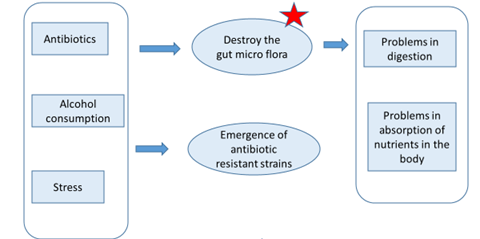
Key properties of probiotic
- Non-pathogenic, non-toxic and non-allergic.
- The organism must be fully identified: genus, species and strain
- Capable of surviving and metabolizing in upper G.I. tract e.g. Resistant to low pH, organic acids, bile juice, saliva and gastric acid
- Human in origin, genetically stable and capable of remaining viable for long periods in field condition.
- Able to modulate immune response and provide resistance to disease through improved immunity or by the production of antimicrobial substance in the guts.
- Good adhesion/ colonization to human intestinal tract and influence on gut mucosal permeability.
- Antagonistic against pathogenic organisms.
- Clinically proven health benefit, e.g. gastrointestinal disorders, diarrhoea, clostridium difficle colitis, antibiotics associated diarrhoea, acute gastroenteritis.
- Technologic properties for commercial viability such as stability of desired characteristics during processing, storage and transportation.
Examples of probiotics
Lactobacillus species -L. acidophilus, L. casei (rhamnosus), L. johnsonii, L. bulgaricus, L. plantarum, L. lactis
Bifidobacterium species- B. bifidum, B. longum, B. infantis, B. lactis, B. adolescentis.
Others- Bacillus cereus, Non-pathogenic Escherichia coli, Saccharomyces cerevisiae (yeast), Enterococcus faecalis
Streptococcus thermophilus.
FMT (Faecal Microbiota Transplant) cannot be considered probiotic, because this involves an undefined mixture of micro-organisms.
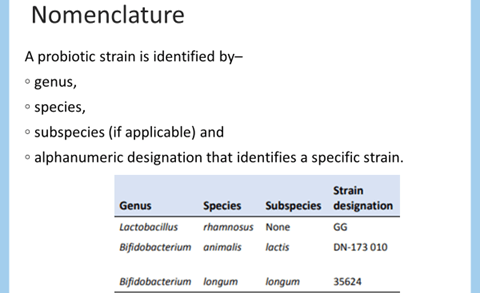
Mechanism of action
- Bioconversion , for example, sugars into fermentation products
- Production of growth substrates, like vitamins B and K, for other bacteria
- Direct antagonism to antimicrobial substances:
- hydrogen peroxide
- organic acids
- Bacteriocin
- Acidophilin
- Improve absorption of nutrients
- Production of β- D- galactosidase enzymes that break down lactose .
- Reduction of inflammation, thus altering intestinal properties
- Stimulation of innate immune response
Foods containing Probiotics
- Milk, Soya milk, Milk products- Sour cream, Butter milk, Yoghurt, Fermented Indian foods like Idlis, Dosas, uttapam, Dhoklas, Vadas, Kadhi.
Genetically Engineered Probiotics
- A genetically modified Bacteroides ovatus and Xylan in small amounts as a therapy to animals with colitis.
- ViBact (which is made up of genetically modified Bacillus mesentricus), which acts as an alternate to B-complex capsules.
Benefits of Genetic engineering:
- Strengthen the effects of existing strains
- As vector for vaccines and growth hormones
Clinical application of probiotics
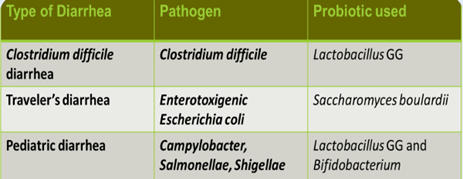
results are promising but not yet conclusive.
- Diarrheal Illness - treatment and prevention
- Prevention of antibiotic-associated diarrhea (AAD)
- Genito-urinary.
- Inflammatory bowel disease (ulcerative colitis,CD)
- Lactose intolerance
- Cancers
- Food allergies
- Eczema
- Necrotizing enterocolitis
Allergy
- Atopic eczema, Dermatitis, Allergic rhinitis, Asthma, food allergies with peanuts, tree nuts, soy, wheat gluten, fish
- Atopic children tend to have a degree of dysbiosis with more clostridia and fewer bifidobacteria
- é IgE thought to be caused by a skewed balance between T helper type 1 and T helper type 2 cells
- Probiotics improving the Th1/Th2 balance in favor of a predominance of Th1 cells
Genitourinary
- Recurrent Candida Vaginitis and Bacterial Vaginosis have been successfully treated by administration of both oral and vaginal Lactobacilli
- Vaginal pessaries with 1 billion colony forming units
IBD
- IBD is associated with a breakdown of the normal barrier function provided by the gut epithelial lining and its associated with decreased mucus commensal bacteria.
- Use of probiotics and prebiotics giving good results in maintaining remission in UC but not of much in CD
- Nissle strain - Only probiotic recommended in ECCO guidelines as effective alternative to mesalazine in maintenance of remission in UC patients.
- Good evidence for preventing an initial attack of pouchitis, and relapse of pouchitis after the induction of remission with antibiotics
- Can be recommended in mild pouchitis, or as maintenance therapy for those in remission
- Usually 1x10⁹, or 1 billion colony forming units (CFU) is a good daily dose
IBS
- Prebiotics relieve constipating symptoms-
- Increased bacterial mass and osmotic water-binding capacity making stools bulky
- Increased stool frequency and make stools softer
- A reduction in abdominal bloating and flatulence as a result of probiotic treatments is a consistent finding
- Some strains may ameliorate pain and provide global relief (B. infantis 35624)
- Dose - 108 cfu of the freeze-dried probiotic bacteria B. infantis spec.
Immunoregulation
- Probiotics helps to Increase IgA production by B- cells
- Has antiviral property, induce NO synthase (a virus infected cell death mechanism)
- Production of gamma intereferon, TNF-alph,IL-1 by mononuclear cells incubated with Lactobacillus. Increase cytotoxic potential of NK cells, increasing IL-10 synthesis thus preventing acute infectious disease
- Adherant Lactobacilli and Bifidobacteria significantly increase phagacytosis.
Anticancer effects
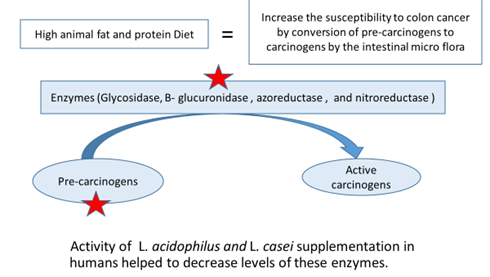
- Probiotics have been shown to improve biomarkers associated with colorectal cancer
- 5-wk supplementation of probiotics reduced the urinary excretion of aflatoxin, a marker for hepatocyte carcinogenesis, and symbiotic consumption for 12 wk significantly reduced colorectal cancer risk
Necrotizing Enterocolitis
- Reduces the risk of necrotizing enterocolitis in preterm neonates.
- Meta-analyses have also shown a reduced risk of death in probiotic-treated groups, although not all probiotic preparations tested are effective.
- NNT to prevent one death from all causes by treatment with probiotics is 20.
Adverse effects
- Probiotics side effects, if they occur, tend to be mild and digestive symptoms. (such as gas or bloating).
- May cause infections, especially in immuno- compromised patients.
- Diabetic patients should be cautious about taking probiotic drinks available in the market as they contain high level of sugar.
Probiotic products taken as a dietary supplement are manufactured and regulated as functional foods, not drugs.
- Probiotics supplements are not necessary for normal, healthy individuals.
- In healthy individuals, daily consumption of probiotics rich foods, particularly fermented dairy products like yoghurt adequately supplies the amount of probiotics required to maintain a healthy digestive system and overall wellbeing.
- A diet high in starches and fibre provide prebiotics, which keep a healthy population of probiotics in our intestines.
Challenges
- Retention of viability of the probiotic bacteria - The numbers of viable bacteria continually decrease with time during refrigerated storage
- A serious problem of shelf instability had been encountered with dried Cultures.
- Manufacturer needs to incorporate an excess of cells at the time the tablets are manufactured. This practice increases the cost and makes the use instructions inaccurate
- Extreme temperatures, high pressure, shear forces can destroy the preperations
- Survival of most bifidobacteria in most dairy products is poor due to low pH and/or exposure to oxygen
- Difficulty in assessment of efficacy of probiotics
- Currently in India, probiotics are characterized as functional food
- Regulated by food laws - FSSA (eatables regulations covering nutraceuticals, foods and dietary supplements)
- ICMR and DBT have formulated guidelines for probiotics being marketed as foods.
- These guidelines specify the criteria when launching a probiotic food, labelling requirements
- They describe parameters to define a product as 'probiotic'.
- May be used as a reference to establish probiotic standards in the country by the FSSAI
- Probiotics delivered in food MAY NOT be tested in PHASE 3 studies, unless the product makes a specific health claim wherein it becomes necesssary to carry out Phase 3 studies.